Imagine you’re looking for software to manage your business. After a quick online search, you find dozens of ready-made solutions that promise to handle everything from inventory and sales to customer management. They seem affordable, easy to use, and ready to go.
But after a few months, you realize the software doesn’t quite fit your workflow. You team still relies on spreadsheets, manual processes, and workarounds to get things done.
This is a challenge many businesses face. While off-the-shelf software works well for some organizations, others need a solution designed specifically for the way they operate.
So, how do you know which options is right for your business?
Understanding the Difference
Before comparing the two, it’s important to understand what each option offers.
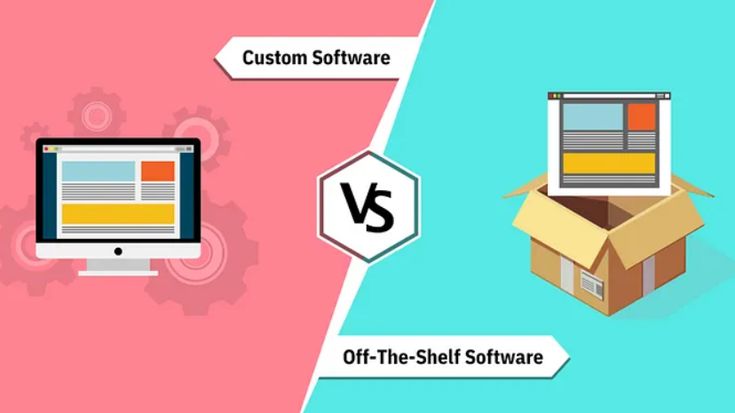
Off-the-shelf software is ready-made application built to serve a wide range of businesses. Example include accounting software, project management tools, and customer relationship management (CRM) platforms. These solutions are designed for general use and can usually be implemented quickly.
Custom software, on the other hand, is develop specifically for a business’s unique requirements. Instead of forcing your processes to fit the software, the software is built to support the way your business already operates or how you want it operate in the future.
When Off-the-Shelf Software Makes Sense
For startups and small businesses with straightforward operations, off-the shelf software can be a practical choice.
It typically offers:
- Faster implementation
- Lower upfront coast
- Regular updates from the software provider
- A familiar interface with built-in features.
These advantages makes it an attractive option for businesses that need a simple solution without extensive customization.
However, as business grow, they often discover that generic software has limitations.
The Limitations of Ready-Made Software
No two businesses operate exactly the same way.
You may have unique approval processes. reporting requirements, pricing models, or customer workflows that standard software wasn’t designed to handle.
As a result, businesses often experience challenges such as:
- Paying for features they never use
- Missing features that are essential
- Difficulty integrating with existing systems
- Manual work to bridge gaps between different applications
- Limited flexibility ad the business grows.
Instead of improving efficiency, the software may actually create additional work.
Why Businesses Choose Custom Software
Custom software is designed around your business rather than the other way around.
Because it’s tailored to your operations, every feature has a purpose.
Some of the key advantages include:
Built Around Your Workflow
Your employees can continue working efficiently without changing established processes simply to accommodate software limitations.
Better Integration
Custom software can connect with your existing website, accounting system, inventory management, or other business tools, reducing duplicate work and improving data accuracy.
Scalable for Future Growth
As your business expands, custom software can be updated with new features and capabilities instead of requiring a complete replacement.
Greater Efficiency
Automation of repetitive tasks helps reduce manual work, minimize errors, and improve productivity across departments.
Which Options Is Best for Your Business?
The answer depends on your business goals.
If your operations are relatively simple and your requirements are standard, off-the-shelf software may provide everything you need.
However, if your business has unique processes, is experiencing rapid growth, or struggles with multiple disconnected systems, investing in custom software may deliver greater long-term value.
Rather than focusing only on the initial cost, businesses should also consider factors such as efficiency, scalability, employee productivity, and future business needs.
Choosing the Right Technology Is a Long-Term Decision
Technology should support your business, not limit it.
Many businesses start with ready-made software because it offers a quick solution. However, as operations become more complex, they often reach a point where customization becomes essential for continued growth.
Choosing software isn’t simply about solving today’s challenges; it’s about preparing your business for tomorrow.
How Apploqic Can Help You
Every business operates differently, which is why one-size-fits-all approach doesn’t always work. At Apploqic, we develop custom software solutions that are tailored to your business goals, workflow, and operational requirements,
Whether you need a customer management system, inventory solution, internal business platform, booking system, or enterprise application, our team works closely with you to build software that improves efficiency, support business growth, and integrates seamlessly with your existing processes.
Our goals isn’t just to develop software, it’s to create digital solutions that help your business operates smarter, adapt faster, and grow with confidence.
Conclusion
Both custom software and off-the-shelf software have their place in today’s business landscape. The right choice depends on your organization’s size, complexity, and long-term objectives.
By understanding the strengths and limitations of each option, businesses can make informed technology investments that improve efficiency, support scalability, and create a stronger foundation for future success.