A few years ago, digital marketing could be relatively straightforward.
A business created a Facebook page, posted regularly, ran the occasional advertisement and vailed for customers to respond. For some businesses, that approach worked well enough.
But the digital landscape has become for more crowded.
Today, a potential customer might discover a business through a TikTok video, search for its name on Google, browse its Instagram account, visits its website, read customer reviews and send a WhatsApp message, all before making a single purchase.
The customer may never think of these actions as “digital marketing.”
For the business, however, they are all connected.
This is what makes digital marketing more complicated today. The challenge is no longer simply getting online. It is creating an online presence that can capture attention, build trust, answer question and eventually encourage someone to take action.
And for business that are still treating digital marketing as nothing more than posting on social media, that shift matters.
Digital Marketing Is No Longer Just About Posting
When many people hear the term “digital marketing”, social media is often the first thing that comes to mind.
There is a reason for that.
Social media gives businesses a direct way to communicate with their audience. A company can introduce a new product, share an announcement, educate customers, respond to questions and build a recognizable brand without relying entirely on traditional advertising.
But posting content and having a digital marketing strategy are not the same thing.
A business can publish five times a week and still have no clear idea of:
- Who it is trying to reach
- Why people should care about the content
- What action customers should take
- Which platform is actually producing results
- Whether its marketing is contributing to business growth.
More posts do not automatically create more customers.
The important questions is not “How often we posting?”
It is “What are we trying to achieve with what we are posting?”
A post designed to increase brand awareness will have a different purpose from one designed to generate enquiries. An educational article serves a different role from a promotional advertisement.
Once businesses understand this distinction, content becomes part of a strategy rather than a collection of disconnected posts.
Customers Don’t Follow the Marketing Funnel Anymore
The traditional marketing journey was often presented as a neat sequence.
Awareness -> Interest -> Consideration -> Purchase
Real customers are rarely that predictable.
Someone might discover a company through Instagram, forget about it, encounter the company again through a Google search three weeks later, watch one of its videos and finally visits its website after seeing a recommendation from a friend.
Another customer might discover a company through Google first and only look at its social media afterwards.
The journey can move backwards and forwards different platforms. This means businesses need to think about the entire customer experience, rather than treating every digital channel as an isolated marketing activity.
A social media account should not feel disconnected from the website. The website should not feel disconnected from the company’s branding. An advertisement should not lead customers to a page that has nothing to do with what they were promised. b
Every interaction contributes to the customer’s impression of the business.
Being Seen Is Different From Being Remembered
Attention has become one of the most competitive resources online.
Every day, customer scroll past advertisement, videos, promotions, news and countless other businesses competing for their attention.
Getting someone to stop scrolling is valuable. But stopping the scroll is only the beginning. A business need to give people a reason to remember it.
This is where useful and relevant content becomes important. Instead of constantly telling customers that a company is “the best”, businesses can demonstrate their knowledge.
A web development company could explain why a slow website loses potential customers. A cybersecurity provider could explain how phishing attacks work.
A data analytics company could show how businesses can use data to make better decisions.
The content becomes more than advertising. It becomes a way for the business to demonstrate knowledge, credibility and value.
That can be especially important when customers are comparing several businesses offering similar services.
SEO Still Matters, But Search Behaviour Is Evolving
Social media isn’t the only please customers discover businesses.
Search engines remain an important part of the customer journey, particularly when someone already has a specific problem or need.
Consider the difference between these two situations. Someone sees a company’s Instagram post while casually scrolling.
Another person searches:
“Best accounting software for small businesses.”
The second person is actively looking for a solution. This is one reason SEO remains valuable. Good SEO helps businesses become discoverable when potential customers are actively searching for information related to what they offer.
But search itself is evolving.
People are increasingly encountering information through AI-powered tools, social platforms, video platforms and other digital experiences. This doesn’t mean traditional search has suddenly disappeared. It means businesses have more places to consider when thinking about how people discover information.
The fundamental principle remains the same:
Create information that genuinely helps people answer the questions they are asking.
Your Website Is Still One of Your Most Important Digital Assets
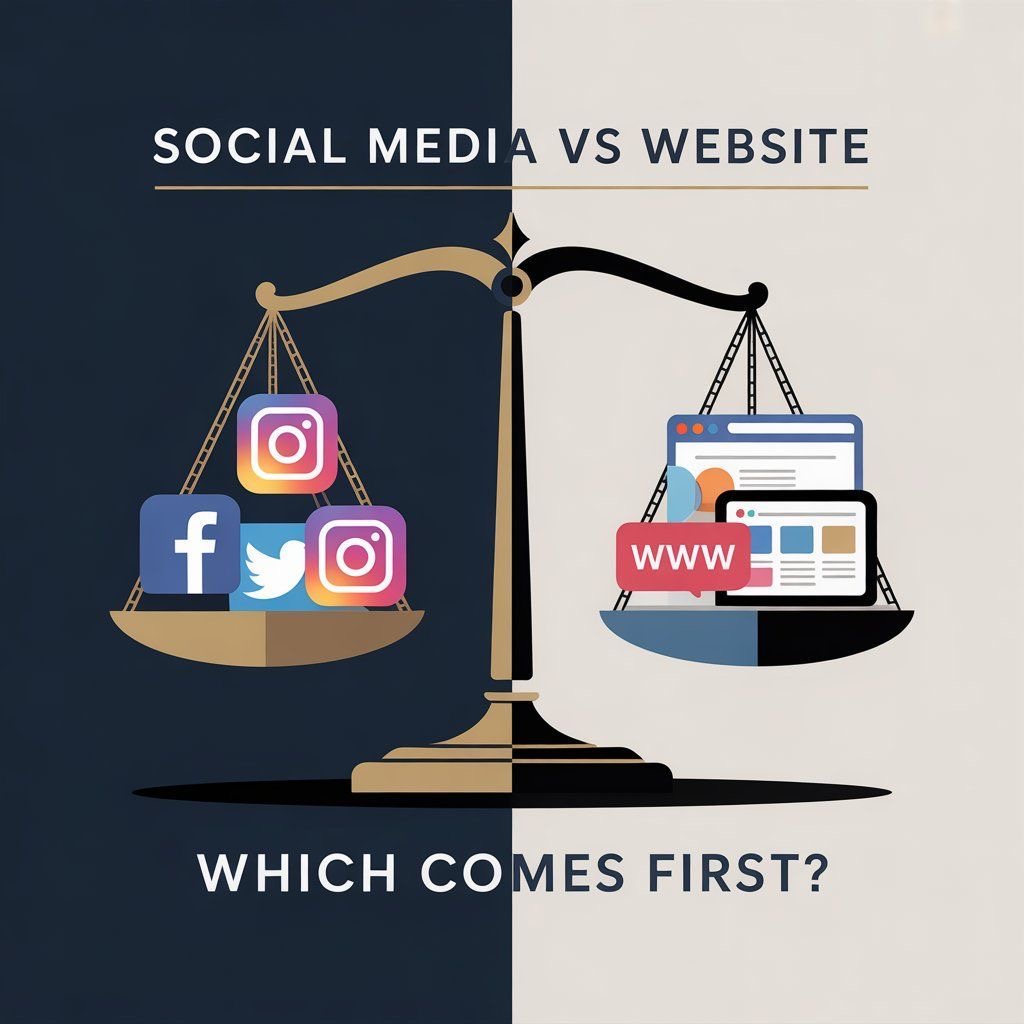
With the rise of social media, some businesses have questioned whether they even need a website. For businesses that want to build a long-term digital presence, that can be a risky assumption.
Social platforms are useful for reaching audiences, but businesses don’t control how those platforms operate. Algorithm. Feature change. User behaviour changes.
A website gives a business a dedicated space to explain a who is it and what it offers.
It can bring together:
- Company information
- Services
- Products
- Portfolio
- Customer testimonials
- Article
- Contact detail
- Enquiry forms
- Booking systems
- E-commerce functions
More importantly, the website can act as the destination for other digital marketing efforts.
A social media post can send someone to a website.
A google search can lead someone to a service page.
An advertisement can direct a potential customer to a landing page.
An article can direct a potential customer’s question and introduce them to the company’s service.
Instead of thinking about the website as another platform that needs to be maintained, businesses can treat it as the central point that connects their digital presence.
Not Every Business Need to Be on Every Platform
There is a temptation to believe that successful digital marketing means being everywhere.
Facebook. Instagram. TikTok. LinkedIn. YouTube. Google.
And whatever new platform appears next.
But trying to maintain every channel can create another platform: spreading your resources too thin.
A business doesn’t necessarily need six active social media accounts. It needs to understand where its customers are.
A B2B technology company may benefit more from LinkedIn, Google and a strong website than from trying to produce daily entertainment content on TikTok.
A restaurant may find Instagram, TikTok and Google Business Profile far more relevant,.
The right questions isn’t:
“Which platform is popular?”
It’s:
“Which platform makes sense for our customers and our business?”
That small change in thinking can make a digital marketing strategy much more focused.
AI Is Changing the Way Businesses Approach Marketing
Artificial intelligence has added another layer to digital marketing.
Businesses can now use AI to assist with content ideas, customer communication, data analysis, research, personalization and repetitive marketing tasks.
That can save time.
But there is a difference between using AI and having an AI strategy.
Producing large amounts of generic content does not automatically make a business more competitive. In fact, as more businesses gain access to similar AI tools, simply producing more content may make it even harder to stand out.
The businesses that benefit from AI are likely to be those that combine technology with something AI cannot replace on its own: a clear understanding of their customers, industry and brand.
AI can help a business work faster.
It still needs a business strategy to know where it should be going.
Stop Measuring Marketing Success by Likes Alone
One of the biggest changes businesses need to make is how they define success. Likes are easy to see. So are followers, views, and comments. But a business can gain thousands of views without generating a single meaningful enquiry.
That doesn’t mean engagement is useless. It simply means engagement is only one part of the picture.
Businesses should also also consider metrics such as:
Website traffic
- Are people visiting your website?
Enquiries and lead
- Are potential customers actually contacting you?
Conversion rate
- How many visitors are leads become customers?
Cost per lead
- How much are you spending to generate an opportunity?
Customer acquisition
- Are your marketing efforts contributing to actual business growth?
These measurements provide a clearer picture of whether digital marketing is contributing to the company’s objectives.
The goal isn’t to create the biggest number.
The goal is to create meaningful business results.
The Real Challenge Is Connecting Everything
A social media account, a website, an advertisement on its own is not a strategy.
The real value comes from how these elements work together.
Imagine a potential customer sees an educational video from your company. They become interested and search for your business.
They find your website.
The website explains your services clearly and provides useful information.
The customer submits an enquiry.
Your team follows up.
That is a digital journey.
Every step has a role.
This is why digital marketing increasingly requires businesses to think beyond individual platforms and consider the complete experience.
So, What Should Businesses Do Next?
There is no universal formula for digital marketing.
A successful strategy for one business may not work for another.
Instead of immediately jumping onto the latest trend, businesses should start with a few basic questions:
Who are our customers? What problems are they trying to solve? Where do they look for information? What makes our business different? What do we want customers to do after discovering us? How will we know whether our marketing is working?
The answers can help determine which platforms, content and marketing activities are worth investing in.
The objective isn’t to do more. It is to do what makes sense.
How Apploqic Can Help
For many businesses, managing all these moving parts can become difficult.
Creating content is one task. Managing social media is another. Improving search visibility requires a different set of skills. Understanding performance requires data. And all of this still needs to connect back to the company’s wider business goals.
This is where having the right digital marketing partner can make a difference.
At Apploqic, we provide digital marketing solutions designed to help businesses strengthen their online presence and connect with their target audiences. Our services cover platforms including Facebook, Instagram, Google, LinkedIn and XiaoHongShu, alongside marketing strategy, content, advertising and performance tracking.
Because Apploqic also provides website development, data analytics and other digital solutions, businesses can look at their digital presence more holistically rather than treating marketing, technology and data as completely separate areas.
Whether the objective is to increase awareness, reach new audiences, generate enquiries or improve an existing digital strategy, the starting point is understanding what the business actually needs.
Digital Marketing Isn’t About Chasing Every Trend
The digital landscape will continue to change.
New platforms will appear. Algorithms will evolve. AI will become more capable. Customers will discover information in new ways.
Businesses cannot realistically predict every change.
What they can do is build a marketing approach that is flexible enough to adapt.
That means understanding customers, creating useful content, choosing the right channels, measuring results and being willing to change when something isn’t working.
Digital marketing isn’t about being everywhere.
It isn’t about posting every day.
And it certainly isn’t about collecting the biggest number of likes.
It is about connecting the right message with the right audience at the right moment—and turning that connection into something meaningful for the business.
In 2026, the question is no longer whether your business should be online.
The real question is whether your digital presence is working hard enough for your business.